The Critical Role of Raw Material Quality Control in Automated Paint Brush Manufacturing
Oct 19, 2026
In the competitive paint brush industry, product quality begins long before bristles meet handles. It starts with raw material selection—and as production shifts from manual to automated methods, the standards for incoming materials have never been higher. Machine manufacturing does not simply increase output speed; it raises the bar for raw material consistency, creating a reverse quality control mechanism that benefits the entire supply chain.
The ferrule—the metal band that secures bristles to the handle—is foundational to brush durability. Most ferrules today are made from tinplate or stainless steel, each offering different hardness profiles. Harder materials deliver greater structural stability, ensuring the brush head remains rigid and firmly anchored during use. However, higher hardness invariably means higher material costs, forcing manufacturers to strike a careful balance between performance and economics.
In manual production, slight variations in ferrule hardness are manageable. Skilled workers can adapt their technique to softer or harder stock, and minor imperfections can be corrected by hand. In automated manufacturing, this flexibility disappears. If the ferrule material is too soft, the forming process fails: the machine cannot crimp or shape it with consistent precision, leading to misaligned heads and high rejection rates. Similarly, ferrules with even minor defects—uneven edges, surface blemishes, or thickness variations—will jam the production line or produce defective brushes.
This creates an automatic quality gate. The machine itself acts as a non-negotiable inspector, rejecting substandard ferrules before they enter the assembly process. For manufacturers, this means establishing clear, measurable specifications for their in-house ferrule production or external suppliers. Rather than subjective judgments of "good enough," there are concrete parameters for material tensile strength, dimensional tolerance, and surface finish that must be met.
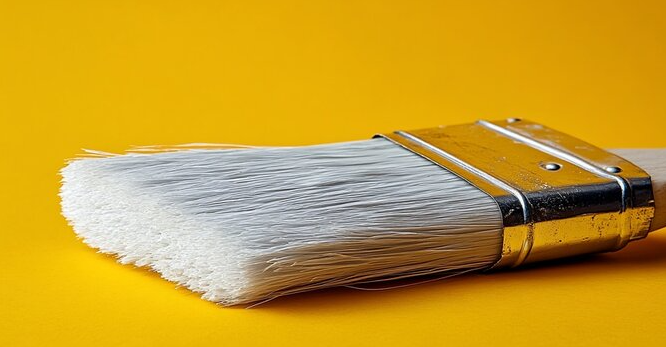
Bristle quality presents a similar dynamic. To reduce costs, many manufacturers blend shorter filaments into their bristle stock. In manual production, workers can manually arrange and trim these mixed lengths, making the inconsistency largely invisible to the end user. It is a workaround that has been practiced for decades.
Automated production, with its emphasis on standardization and high throughput, cannot compensate in this way. At production speeds of hundreds of brushes per hour, the tufting mechanism requires filaments of sufficient length to grip securely. Too many short fibers result in drop-out, incomplete tufts, and uneven trim.
This does not mean automated lines require 100% long, premium filaments. Machine builders understand their customers' cost pressures and design equipment that can accommodate shorter filaments—within defined limits. The key difference is that those limits are precise and non-negotiable. There is a minimum length threshold below which the machine simply cannot function reliably. Paint brush manufacturers must therefore find the optimal balance point: using the most cost-effective bristle blend that still falls within the machine's operating specifications. This, again, pushes quality control upstream to bristle suppliers, who must deliver consistent fiber length distributions rather than random batches.
Automated manufacturing transforms raw material quality control from a discretionary step into an operational necessity. Machines cannot improvise or compensate for substandard inputs the way human workers can. While this initially raises procurement challenges, it ultimately leads to more consistent products, clearer supplier specifications, and fewer downstream defects. The machine does not just make brushes—it enforces quality at the source.
Read More






 IPv6 network supported
