Leave A Message
If you are interested in our products and want to know more details,please leave a message here,we will reply you as soon as we can.
submit
banner

Blog

Home

Blog

  • The Underestimated Workhorse: Small Paint Brushes Under 1 Inch and Their Production Reality
    The Underestimated Workhorse: Small Paint Brushes Under 1 Inch and Their Production Reality
    Nov 03, 2026
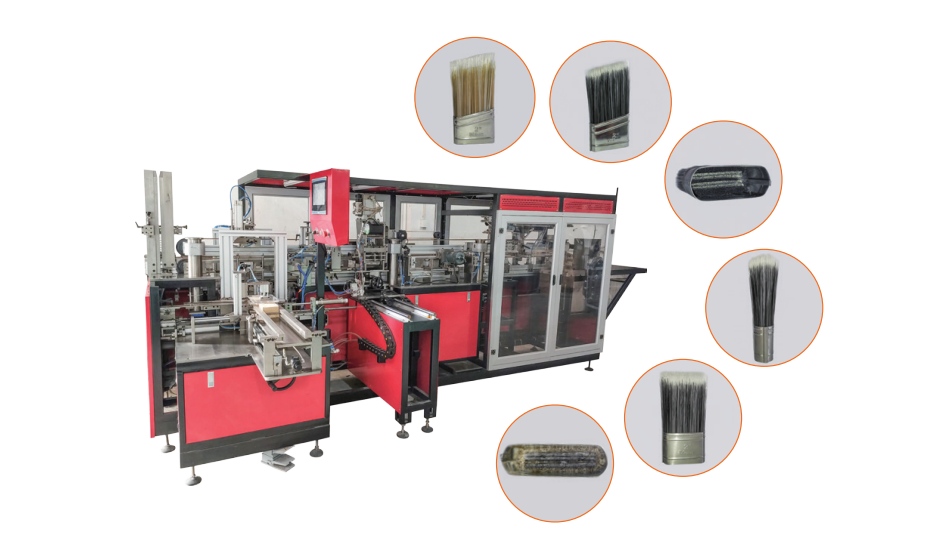
    In the global painting tools industry, small paint brushes under 1 inch are often overshadowed by their larger wall brush counterparts, yet they remain irreplaceable for precision work. Designed for narrow spaces and fine detailing, these compact brushes serve critical roles across residential, commercial and craft sectors. Painters rely on them for cutting in along ceiling lines, painting window mullions, door casings and baseboard edges where rollers and wide brushes cannot reach without smudging. Furniture refinishers use them to coat carved grooves, decorative moldings and narrow cabinet frames without pooling paint on adjacent surfaces. Beyond construction, they are staple tools for model building, craft projects, touch-up repairs and industrial component coating, creating steady, diversified demand worldwide.   The global paint brushes market is projected to reach USD 4.65 billion in 2025 and grow to USD 6.48 billion by 2032 at a 4.8% CAGR, with small-format brushes holding a stable and resilient segment. Demand is fueled by sustained home renovation activity, the global DIY culture boom, and growth in art and craft supplies. While unit prices are lower than wall brushes, small paint brushes enjoy higher turnover rates, broader customer bases and repeat purchase patterns that make them a reliable profit stream for manufacturers. For many brush factories, they also serve as an entry-level product line to reach new buyers and expand market share.   However, producing small brushes under 1 inch comes with distinct technical challenges that set it apart from standard flat brush manufacturing. First, precision requirements rise dramatically as ferrule width shrinks. Even minor inconsistencies in bristle distribution or length will cause visible defects, uneven paint release and excessive shedding. Second, fine synthetic filaments are fragile; standard feeding mechanisms built for larger brushes often break or bend thin bristles during processing, driving up material waste. Third, manual production is extremely slow and quality varies drastically between workers, making it nearly impossible to scale output while maintaining consistent standards. Most general-purpose brush machines cannot be easily adjusted for sub-1-inch ferrules, forcing many manufacturers to either accept low efficiency or skip the segment entirely.   This is where Hengyu’s purpose-built small brush head machine delivers targeted value. Engineered exclusively for brushes from 0.5 to 1 inch, the system produces 18–20 finished brush heads per minute with uniform bristle alignment, secure ferrule crimping and controlled filament tension. It eliminates the breakage and density inconsistencies common with adapted machinery, giving manufacturers a reliable path to high-volume, low-defect small brush production.
    Read More
  • Wall Brush vs. Flat Brush: Production Realities and the Case for Automation
    Wall Brush vs. Flat Brush: Production Realities and the Case for Automation
    Oct 26, 2026
    In the global paint tools market, both wall brushes and standard flat brushes hold strong, steady demand despite serving distinct use cases. Flat brushes, widely used for trim work, furniture coating and detailed finishing, form a massive market segment valued at $344.74 million in 2023 and projected to grow at a 2.1% CAGR through 2029. Wall brushes, built for large-surface interior and exterior painting, command a higher unit price driven by their wider format, heavier bristle load and larger ferrule size — often costing 2–3 times more than equivalent-grade flat brushes.   Yet higher value comes with higher manufacturing complexity. Flat brushes, with their narrow ferrules and lighter bristle packs, are relatively straightforward to produce even at smaller scales. Wall brushes, by contrast, require precise bristle distribution, secure wedge retention and consistent density across a much wider head. For manual production, these requirements create persistent pain points.   First, manual bristle filling for wide wall brushes struggles with uniformity. Workers often produce heads with uneven bristle length or density, leading to shedding, streaky paint application and high rejection rates. Second, inserting and securing wedges inside wide ferrules is labor-intensive and inconsistent; loose wedges cause premature brush failure and quality complaints. Third, output remains severely limited: experienced manual crews typically produce only a few hundred wall brushes per day, making it hard to scale for large orders or compete on cost with automated factories. Finally, labor cost volatility and training burdens further erode margins for manual wall brush production.   This is where Hengyu’s purpose-built Wall Brush Head Machine delivers clear value. Engineered specifically for wide-format wall brush production, the system automates bristle feeding, wedge insertion and ferrule crimping in a single continuous workflow. It delivers consistent bristle density, precise wedge placement and uniform head shaping across every unit, with daily output reaching about 8000 finished heads. By replacing manual labor with controlled automation, manufacturers can cut material waste, reduce rejection rates and scale up wall brush production without expanding headcount.
    Read More
  • The Critical Role of Raw Material Quality Control in Automated Paint Brush Manufacturing
    The Critical Role of Raw Material Quality Control in Automated Paint Brush Manufacturing
    Oct 19, 2026
    In the competitive paint brush industry, product quality begins long before bristles meet handles. It starts with raw material selection—and as production shifts from manual to automated methods, the standards for incoming materials have never been higher. Machine manufacturing does not simply increase output speed; it raises the bar for raw material consistency, creating a reverse quality control mechanism that benefits the entire supply chain.   The ferrule—the metal band that secures bristles to the handle—is foundational to brush durability. Most ferrules today are made from tinplate or stainless steel, each offering different hardness profiles. Harder materials deliver greater structural stability, ensuring the brush head remains rigid and firmly anchored during use. However, higher hardness invariably means higher material costs, forcing manufacturers to strike a careful balance between performance and economics.   In manual production, slight variations in ferrule hardness are manageable. Skilled workers can adapt their technique to softer or harder stock, and minor imperfections can be corrected by hand. In automated manufacturing, this flexibility disappears. If the ferrule material is too soft, the forming process fails: the machine cannot crimp or shape it with consistent precision, leading to misaligned heads and high rejection rates. Similarly, ferrules with even minor defects—uneven edges, surface blemishes, or thickness variations—will jam the production line or produce defective brushes.   This creates an automatic quality gate. The machine itself acts as a non-negotiable inspector, rejecting substandard ferrules before they enter the assembly process. For manufacturers, this means establishing clear, measurable specifications for their in-house ferrule production or external suppliers. Rather than subjective judgments of "good enough," there are concrete parameters for material tensile strength, dimensional tolerance, and surface finish that must be met.   Bristle quality presents a similar dynamic. To reduce costs, many manufacturers blend shorter filaments into their bristle stock. In manual production, workers can manually arrange and trim these mixed lengths, making the inconsistency largely invisible to the end user. It is a workaround that has been practiced for decades.   Automated production, with its emphasis on standardization and high throughput, cannot compensate in this way. At production speeds of hundreds of brushes per hour, the tufting mechanism requires filaments of sufficient length to grip securely. Too many short fibers result in drop-out, incomplete tufts, and uneven trim.   This does not mean automated lines require 100% long, premium filaments. Machine builders understand their customers' cost pressures and design equipment that can accommodate shorter filaments—within defined limits. The key difference is that those limits are precise and non-negotiable. There is a minimum length threshold below which the machine simply cannot function reliably. Paint brush manufacturers must therefore find the optimal balance point: using the most cost-effective bristle blend that still falls within the machine's operating specifications. This, again, pushes quality control upstream to bristle suppliers, who must deliver consistent fiber length distributions rather than random batches.   Automated manufacturing transforms raw material quality control from a discretionary step into an operational necessity. Machines cannot improvise or compensate for substandard inputs the way human workers can. While this initially raises procurement challenges, it ultimately leads to more consistent products, clearer supplier specifications, and fewer downstream defects. The machine does not just make brushes—it enforces quality at the source.
    Read More
  • Automating Handle Assembly & Nailing: The Next Leap in Paint Brush Manufacturing
    Automating Handle Assembly & Nailing: The Next Leap in Paint Brush Manufacturing
    Oct 12, 2026
    In the paint brush production workflow, handle setting and ferrule nailing represent two critical downstream steps that directly impact final product durability and overall production throughput. Traditionally completed manually, these processes have long been bottlenecks for manufacturers seeking to scale output while maintaining consistent quality. As labor costs rise and global quality standards tighten, automating these two operations has moved from a nice-to-have upgrade to a strategic necessity for competitive production.   Manual handle assembly requires workers to press pre-assembled brush heads into wooden or plastic handles one by one, followed by hand-driven nailing to secure the metal ferrule. This approach suffers from three inherent limitations. First, inconsistent nailing depth and positioning lead to uneven product quality and higher rejection rates, often running 8–12% in manual workshops. Second, repetitive gripping and hammering motions cause operator fatigue and increased risk of musculoskeletal work-related injuries. Third, output is strictly limited by labor availability and individual speed, typically topping out at 300–400 pieces per worker per shift.   Automated handle setting and nailing systems address all these pain points systematically. With precision mechanical positioning and pneumatic nailing mechanisms, automated machines deliver consistent nail depth, alignment, and insertion force across every single unit, reducing defect rates by up to 85% compared to manual work. Production speed increases dramatically—modern systems can process 8000-10000 brushes per day, tripling manual output while requiring only one operator for material feeding and basic monitoring. Labor costs drop by 60–70% per production line, and workplace safety improves significantly by eliminating repetitive hand nailing operations entirely.   Introducing Hengyu’s Integrated Solution   Hengyu Automation’s Set Handle & Nailing Machine takes this automation a step further by integrating both processes into a single compact workstation. Unlike separate machines that require additional material handling between steps, this integrated design completes handle insertion and ferrule nailing in one continuous cycle, saving valuable factory floor space and reducing intermediate handling time.   Recognizing that not all paint brush designs require nailing—many modern brushes use snap-fit ferrule systems that lock handles securely without fasteners—Hengyu offers two flexible configurations to match different product portfolios:   - A dedicated handle-setting-only machine for snap-fit and press-fit brush designs - A combined handle setting + nailing machine for traditional nailed ferrule construction   Both configurations feature PLC control, quick-change tooling for different handle sizes, and compatibility with standard paint brush ferrule dimensions. This modular approach means manufacturers can invest according to their current product mix and upgrade later as needed, rather than purchasing redundant equipment upfront.
    Read More
  • Global Wall & Block Brush Market: Landscape and Entry Feasibility Analysis
    Global Wall & Block Brush Market: Landscape and Entry Feasibility Analysis
    Oct 05, 2026
    The global wall and block brush market sits at a compelling intersection of steady demand, fragmented competition, and evolving material innovation. For businesses considering entry—whether from adjacent industries, other brush segments, or upstream/downstream positions—understanding the market’s size, growth trajectory, and structural barriers is essential.   According to industry data, the global block and wall brush segment reached approximately USD 1.76 billion in 2024 and is projected to grow at a 3.2% CAGR through 2035, reaching USD 2.5 billion by the end of the forecast period. Within the broader paint tools category, which totals USD 8.26 billion globally, wall and block brushes represent the largest product sub-segment at roughly 56% of total brush revenue, driven by residential renovation, commercial construction, and industrial surface preparation applications. Regionally, North America leads in per-capita consumption, supported by strong home improvement spending and a mature professional contractor base. However, Asia-Pacific is the fastest-growing region, accounting for 38.2% of global revenue and expanding rapidly on the back of urbanization in China, India, and Southeast Asia. Synthetic bristle variants dominate the market with a 52.4% share, as water-based coatings continue to displace solvent-based paints worldwide.   For companies entering from unrelated sectors, the feasibility is moderate with significant caveats. Core manufacturing technology for wall brushes is mature and accessible, and raw materials—wood/plastic blocks, nylon/polyester filaments, and ferrules—are widely available from multiple suppliers, keeping supplier bargaining power low. However, substantial barriers remain: established distribution networks, brand recognition among professional painters, and price competition from Asian OEMs. The top five players hold only about 34.7% of the market, leaving room for newcomers, but success requires either significant pricing advantage or clear product differentiation such as ergonomic design or eco-friendly materials. Capital requirements for production setup are moderate compared to precision industries, making this path viable for companies with strong marketing or e-commerce capabilities.   For companies already producing toothbrushes, industrial brushes, or specialty brushes, entry into wall and block brushes is highly feasible. The core production processes—bristle filling, trimming, and handle assembly—share fundamental similarities, allowing partial utilization of existing equipment and technical expertise. A notable example is China’s Yuantan industrial cluster, where manufacturers successfully expanded from basic wall paint brushes into industrial cleaning brushes, street sweeper brushes, and tile polishing brushes by leveraging existing supply chain infrastructure and production know-how. The primary challenge lies in channel diversification rather than manufacturing capability, as wall brushes serve distinct B2B contractor and DIY retail channels.   For upstream material suppliers and downstream industry players, feasibility varies by position. Upstream material companies such as filament extruders and wood/plastic processors possess raw material cost advantages and technical understanding of bristle performance, but lack final assembly expertise and end-customer relationships. Vertical integration can improve margins but requires investment in secondary production lines and quality control systems. Downstream paint brands and distributors already have established customer relationships and brand equity. Many leading paint companies already offer branded brush lines through private-label partnerships. For these players, in-house manufacturing can strengthen margin control and product bundling strategies, though it may divert focus from core competencies.   The wall and block brush market is not a high-growth, disruptive space—but it is a stable, cash-generating segment with predictable replacement cycles and low technological risk. The most successful entrants will not be those chasing explosive growth, but those who can leverage existing strengths—whether manufacturing scale, material expertise, or channel access—to carve out profitable niches. For cross-industry players, the smartest path is often through acquisition or private-label partnerships rather than greenfield entry. For adjacent brush manufacturers, the question is not whether to enter, but how quickly to align product portfolios with regional construction trends and the accelerating shift toward sustainable, synthetic-fiber solutions.
    Read More

  • Why Wall Brush Manufacturing Demands Stricter Standards Than Smaller Flat Brushes
    Why Wall Brush Manufacturing Demands Stricter Standards Than Smaller Flat Brushes
    Sep 24, 2026
    In the paint brush industry, a larger tool is never just a scaled-up version of a smaller one. Wall brushes, or block brushes, are engineered for high-efficiency large-surface coating, and their manufacturing specifications are far more rigorous than those of standard flat brushes. Every core component is held to tighter engineering tolerances to deliver structural integrity, consistent performance, and uniform appearance. Three key factors account for these higher requirements.   First, wall brush ferrules require greater wall thickness than flat brush ferrules. With a wider brush head comes higher mechanical stress during both assembly and end-use application. A thicker-gauge ferrule provides the rigidity needed to resist deformation, which is critical whether the brush is made by hand or by machine. This naturally means higher raw material input and greater forming force, but it is an unavoidable requirement: only a sufficiently strong ferrule can maintain its shape under bristle tension and crimping pressure, ensuring the entire brush head stays neat, aligned, and visually consistent.   Second, wall brushes call for longer bristle filaments than smaller flat brushes. This is a structural necessity rather than an aesthetic choice. A larger brush body needs longer bristles to evenly distribute anchoring tension across the full width of the head and guarantee overall stability. This is particularly important in automated production: bristles that are too short cannot be securely fixed during the bristle-setting process, resulting in loose filaments and excessive shedding. Proper bristle length also preserves the full, balanced profile of the brush head, a core quality benchmark for professional painters.   Third, the thickness of the internal setting wedge must not exceed 60% of the ferrule’s wall thickness. This is a well-established industry limit with clear practical implications. An over-thick wedge not only makes bristle insertion and fixation much more difficult during assembly, but also forces the ferrule opening outward, creating a “fish mouth” deformation. This defect damages the clean, uniform edge of the brush head, ruining its appearance while also weakening long-term bristle retention.   These strict dimensional tolerances are why wall brush production has significantly higher quality and technical barriers than flat brush manufacturing. Meeting them consistently across large production runs is a major challenge for purely manual workshops, where even small variations in worker operation, tool wear, or material batch can push critical dimensions outside the acceptable range.
    Read More
  • The Wall Brush Market: From Hand Assembly to Automated Manufacturing
    The Wall Brush Market: From Hand Assembly to Automated Manufacturing
    Sep 19, 2026
    Across the global construction and home improvement landscape, wall brushes and block brushes remain indispensable tools for professional painters and DIY enthusiasts. Driven by sustained growth in residential construction, building refurbishment, and decorative coating projects, the global wall brush market maintains a steady upward trajectory. Yet beneath this demand lies a longstanding industry challenge: most wall brushes are still manufactured by hand.   Hand assembly is a labor-heavy process, particularly for wall brushes given their larger brush head size. Tasks from bristle filling to ferrule crimping demand a large workforce, making scaling production difficult. More notably, hand-made quality is notoriously variable. Raw material quality is only one factor; worker performance fluctuates with skill level, fatigue, and even emotional state. A worker having an off-day can easily result in uneven bristle distribution, loose fixation, or subpar finishing, leading to inconsistent batch quality and higher defect rates. As labor costs rise worldwide, this traditional model is becoming both costlier and less reliable.   The shift to machine-made wall brushes, powered by purpose-built wall brush head machines, is redefining the industry. Admittedly, automation has its drawbacks: initial capital investment is higher than manual workshops, and highly specialized, low-volume custom brushes may still need manual fine-tuning. Nevertheless, the benefits far outweigh the downsides. Automated systems deliver unmatched consistency—mechanical precision eliminates human error and quality swings caused by fatigue or mood, ensuring every brush meets the same standard. They also deliver far higher throughput, operating continuously to meet large order volumes efficiently. Over time, automation cuts labor dependency, stabilizes production costs, and strengthens quality control.   For the high-volume 3–6 inch wall brush segment, automation delivers the clearest value, and it will be the defining trend for the market’s future.   Our wall brush head machine is engineered exclusively for 3 to 6 inch wall brush and block brush production. With precise bristle-setting technology and uniform density control, it enables manufacturers to replace unreliable hand assembly with efficient, repeatable automated production.
    Read More
  • How to Lower Paint Brush Production Costs Without Hurting Quality
    How to Lower Paint Brush Production Costs Without Hurting Quality
    Sep 07, 2026
    For many paint brush manufacturers, cutting costs almost always means cutting corners on materials. It seems like the easiest way to squeeze margins is to use cheaper bristles, thinner ferrules, or lower-grade components. But this approach almost always backfires: it leads to higher rejection rates, more customer returns, and a damaged brand reputation. The truth is, most waste in brush production happens in hidden, process-related areas—not in the visible raw materials. With targeted adjustments to material selection, dimensional control, and assembly efficiency, you can reduce total costs without sacrificing product quality.   Wedge material is one of the most underrated cost drivers in brush production. Traditional wooden wedges have low upfront material cost, but they carry heavy hidden expenses. They absorb moisture and swell, causing uneven bristle tension and “fish mouth” defects that raise scrap rates. They also splinter during machine insertion, jamming equipment and creating unplanned downtime. Virgin plastic wedges solve these issues but come at a premium price.   PE regrind wedges strike the optimal balance. Made from recycled polyethylene processed to tight specifications, they deliver the same dimensional stability, moisture resistance, and machine compatibility as virgin PE, but at a significantly lower material cost. They run cleanly on automated assembly lines, produce no splinters, and maintain consistent bristle packing batch after batch. For an internal component hidden inside the ferrule, there is no quality tradeoff—only cost savings.   Most manufacturers don’t realize how much raw bristle material they waste on poor dimensional control. A common shortcut is using thicker wedges to reduce bristle volume inside the ferrule. But this practice actually wastes more material than it saves: it causes misaligned bristle insertion, creates tip defects, and forces machines to reject or rework a higher share of units.   From our production experience, keeping the combined wedge and ferrule wall thickness below 0.6 mm is the golden standard. This ratio maximizes bristle retention, minimizes tip defects, and allows automated bristle-setting machines to run at peak efficiency with minimal waste. When your tooling and components are calibrated to this standard, you use exactly the right amount of bristle material—no more, no less.   Labor and downtime are two of the largest costs in any production facility. Low-quality components don’t just hurt product quality—they slow down your entire line. Wooden wedges require frequent machine cleaning to remove splinters, and inconsistent dimensions mean constant setup adjustments.   As a manufacturer of both brush-making equipment and PE regrind wedges, we design our components to work seamlessly together. Precision-engineered wedges reduce changeover time, eliminate splinter-related jams, and let your line run faster and longer. Higher throughput with less maintenance means lower cost per unit—without any drop in quality.
    Read More
  • Wedge Materials in Paint Brush Manufacturing: Why Plastic (and PE Regrind) Delivers the Best Value
    Wedge Materials in Paint Brush Manufacturing: Why Plastic (and PE Regrind) Delivers the Best Value
    Aug 31, 2026
    When it comes to paint brush performance, most attention lands on bristles and ferrules. Few buyers stop to think about the small wedges inside the ferrule that lock the bristle pack in place. Yet wedge material is one of the most impactful, underdiscussed choices in brush manufacturing. It directly affects assembly consistency, product durability, and production waste. Today, wedges are commonly made from two core material families—wood and plastic—and within plastics, secondary (regrind) PE has emerged as a leading practical option.   Traditional wooden wedges have a long history in the industry. They are low in raw material cost and readily available in basic sizes. However, they carry significant production drawbacks. Wood absorbs moisture from the air or production environment, causing uneven swelling that shifts bristle tension and often creates the “fish mouth” defect at the brush tip. Natural density variations also mean wider thickness tolerances, leading to inconsistent bristle packing across batches. Wooden wedges also splinter during machine insertion, generating waste and contaminating bristle packs.   Plastic wedges eliminate nearly all of these issues. Their dimensional stability is unaffected by humidity, so bristle tension remains consistent in any climate. Precision extrusion delivers tight thickness tolerances, ensuring uniform bristle density across every brush. They produce no splinters, run smoothly on automated assembly lines, and resist cracking over time. The main tradeoff is slightly higher upfront material cost, but this is offset by lower scrap rates, faster production, and fewer quality returns. On balance, plastic wedges outperform wood for nearly all modern brush production.   Not all plastic wedges are equal. Common options include virgin PE, polypropylene (PP), PVC, and secondary PE regrind. Virgin PE offers excellent toughness and consistency but comes at a premium price. PP provides higher rigidity but is more brittle, cracking easily during high-speed insertion. PVC is low-cost but raises environmental and regulatory concerns in many export markets.   Secondary PE regrind—recycled polyethylene processed to consistent specification—strikes the ideal balance. It retains the core benefits of virgin PE: good impact resistance, reliable dimensional stability, and water resistance. Because it uses recycled feedstock, it costs substantially less than virgin material, lowering production costs without sacrificing functional performance. The only minor limitation is slightly less uniform color, which is irrelevant for an internal component hidden inside the ferrule.   As a manufacturer of paint brush production equipment, we also produce high-quality PE regrind wedges engineered for precision assembly. Built on our in-depth expertise in automated bristle-setting machinery, our wedges are made to strict thickness tolerances, and fully compatible with high-speed production lines. Custom sizes and specifications are available to match your exact production needs.
    Read More
  • The Hidden Factors That Shape a Quality Paint Brush
    The Hidden Factors That Shape a Quality Paint Brush
    Aug 29, 2026
    Most people think a paint brush is a simple tool: just bristles pushed into a metal ferrule and fixed to a handle. But anyone who has used both budget and premium brushes knows the final paint finish can differ drastically. The gap comes down to tiny, often unseen manufacturing details. Every component and measurement impacts performance, and cutting corners on any detail will show up on the painted surface. Below are the key factors that determine how well a brush really works.   First, the rigidity and shape accuracy of the ferrule are foundational. The ferrule is the metal sleeve that secures the bristle pack. If the metal lacks stiffness, it will bend or deform during assembly or daily use, losing its uniform shape. An irregular ferrule cannot hold bristles evenly around its inner space. When bristle density varies from one side to the other, the brush tip becomes uneven, leaving streaks and inconsistent coverage. A rigid, precisely formed ferrule guarantees consistent bristle packing across every single brush, which is essential for reliable, repeatable painting results.   Second, bristle material and length define both feel and function. It is easy to assume shorter bristles just make a smaller brush, but the reality is more complex. To create a proper tapered “peak” at the brush tip, very short bristles leave too little length anchored inside the ferrule. Without enough embedded support, the bristles splay easily under pressure and cannot hold a steady shape. Bristle material also matters: stiff synthetic filaments pack differently than soft natural fibers, and a poor match between material and ferrule design ruins the entire bristle set. Good brush design balances length, material, and ferrule depth to build a firm, responsive brush head.   Third, wedge thickness and ferrule wall thickness have a surprisingly large impact on quality. From our production experience, the combined thickness should stay below 0.6 mm. This is really a question of bristle volume. Some manufacturers use thicker wedges to reduce the amount of bristles inside the ferrule, lowering material costs. But this shortcut causes two serious issues. It creates a “fish mouth” defect, where the brush tip spreads open in the middle instead of forming a clean, sharp edge. It also makes machine-driven bristle insertion much more difficult, resulting in more wasted bristle material during manufacturing. Trying to save on bristle costs ultimately delivers worse performance and creates more production waste.
    Read More
  • Is It Worth Transitioning Into Paint Brush Manufacturing? Pros & Cons for Paint and Component Suppliers
    Is It Worth Transitioning Into Paint Brush Manufacturing? Pros & Cons for Paint and Component Suppliers
    Aug 21, 2026
    Many paint manufacturers and upstream component suppliers, including bristle, ferrule and wooden‑handle producers, are evaluating vertical expansion into finished paint‑brush production. Driven by steady global demand for painting tools, this transition seems attractive at first glance, yet it carries hidden operational and technical risks that cannot be overlooked.   For paint manufacturers, the biggest merit lies in product bundling. By launching matching paint brushes, they can deliver one‑stop coating solutions to existing distributors and end‑users, strengthen customer stickiness and lift overall order value. They already possess deep understanding of paint properties, so they can better define brush specifications for water‑based or solvent‑borne coatings. For raw‑material suppliers of bristle, ferrule and wooden handles, they enjoy inherent cost advantages: stable in‑house component supply reduces procurement risks and shortens sample development cycles. Existing client resources in the hardware supply chain can also be reused for finished‑tool sales.   Nevertheless, significant drawbacks limit success for new entrants. Paint‑brush making is not simple assembly. Critical know‑how covers filament trimming, ferrule crimping, high‑strength gluing, and quality control for anti‑shedding performance, knowledge rarely mastered by paint or component‑only factories. Heavy capital investment is required for specialized tufting, trimming and testing equipment. Quality failures such as loose ferrules or bristle shedding will trigger complaints, returns and brand damage, even if raw materials themselves are qualified. Moreover, global market competition is fierce, with thin profit margins for mass‑grade products. Export‑oriented players must also comply with REACH, CPSIA and other regional compliance standards, adding testing and certification costs. Many newcomers underestimate process barriers and end‑up with inconsistent finished‑goods quality despite good‑quality components.   From my perspective as an industry practitioner: upstream enterprises have solid foundations to enter this sector, but they should avoid blindly building full‑range production lines. A more pragmatic path is to cooperate with professional equipment and process partners rather than trying to master every manufacturing link from scratch.   This is exactly where our company delivers value. We provide complete, proven paint‑brush production solutions, covering automated production machinery, standardized process guidance, and technical after‑sales support. Whether you are a paint maker planning supporting tool lines or a bristle / ferrule / handle supplier stepping into finished goods, we help you skip trial‑and‑error stages, stabilize product quality and shorten time‑to‑market. If you intend to explore paint‑brush manufacturing, feel free to reach out for tailored consultation.
    Read More
  • Why New Paint Brush Manufacturers Should Avoid Full Automation at Launch
    Why New Paint Brush Manufacturers Should Avoid Full Automation at Launch
    Aug 17, 2026
    For new players entering the paint brush manufacturing sector, a fully automated end-to-end production line often appears as the fastest path to high output and low labor costs. Yet rushing into full-scale automation without solid operational experience frequently results in costly setbacks, extended downtime and avoidable financial risk. A phased equipment strategy is almost always the smarter, more sustainable way to build a profitable brush-making business.   First, manufacturers new to the paint brush industry lack the process intuition needed to run integrated lines effectively. Quality paint brush production depends on precise control of bristle weight consistency, ferrule crimping force, adhesive curing time and bristle tension—details that can only be learned through hands-on production. A fully connected line requires synchronized tuning across five or more workstations. Without firsthand knowledge of how materials behave under machine processing, new factories commonly see 20–30% defect rates during the three to six month commissioning period, compared with 5–8% for experienced teams, eroding early profit margins.   Second, even prior manual brush-making experience does not translate directly to automated production. Manual assembly lets workers compensate for minor material variations through skill and judgment—for example, adjusting pressure by hand to fit a slightly oversized ferrule. Automated machines, by contrast, run on fixed parameters and will produce consistent rejects until dies, pressure settings and feed rates are recalibrated. Troubleshooting a linked production line demands specialized technical familiarity that takes months to develop, making full automation a poor starting point even for semi-established manual workshops.   Third, the upfront cost of a complete line creates unnecessary cash flow pressure. A full automated paint brush line requires major capital expenditure on equipment, on-site installation, operator training and spare parts inventory. For new factories, order volumes are typically unstable in the first 12 months. A line built for mass production may only run at 30–40% capacity during the trial and market expansion stage, lengthening return on investment and tying up capital that could be used for product development, customer acquisition or raw material stock. Instead of purchasing a complete line upfront, new manufacturers should begin with core standalone equipment: a brush head filling machine, automatic ferrule making machine and precision glue dispenser. These machines cover the most labor-intensive and quality-critical processes while keeping investment moderate. Starting with core machines cuts initial equipment investment by roughly 40–50% compared with a full turnkey line, giving new businesses greater financial breathing room. Factories can operate each unit independently, refine parameters gradually and build in-house technical expertise. After 12 or more months of stable machine production, with confirmed order volume and a trained team, manufacturers can then connect the units into a fully integrated line.   Taking a measured approach ensures process mastery precedes scale, laying a solid foundation for long-term, low-risk growth.
    Read More
1 2 3

leave a message

leave a message
If you are interested in our products and want to know more details,please leave a message here,we will reply you as soon as we can.
submit
Contact Us: info@hengyucom.com

home

products

WhatsApp

Contact Us